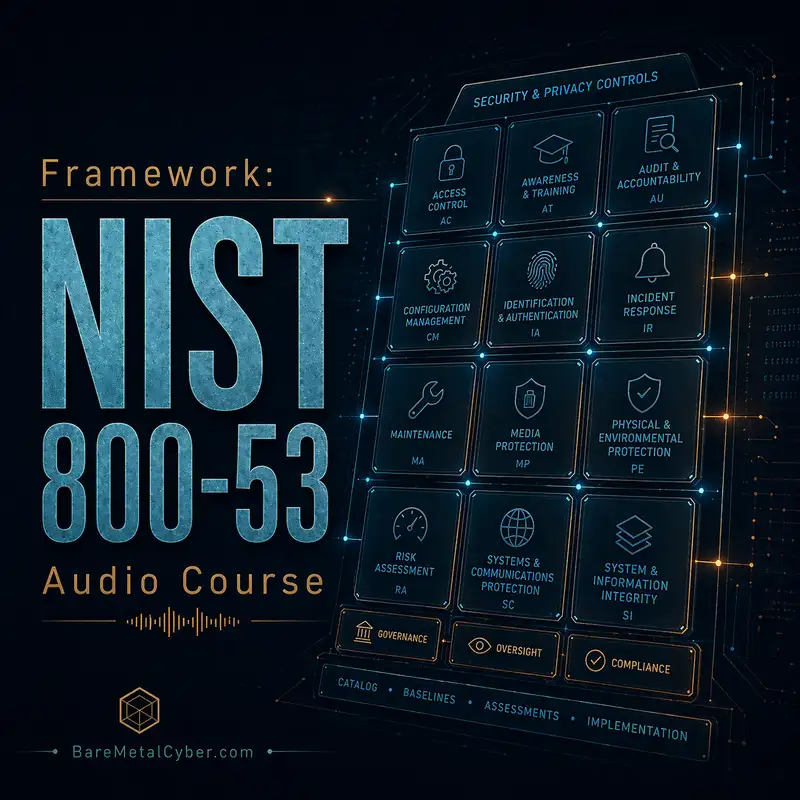
Episode 16 — Access Control — Part Four: Advanced topics and metrics
Advanced access control concepts expand from traditional identity enforcement into dynamic, context-aware decision-making. Within NIST 800-53, advanced patterns include continuous authentication, just-in-time privilege elevation, and policy enforcement points integrated with zero trust architectures. For the exam, candidates must understand how metrics and automation support these evolutions. Metrics such as access request turnaround time, privileged account counts, and frequency of policy violations reveal program health. Advanced implementations may integrate behavioral analytics to detect anomalies or credential misuse in real time. These capabilities reflect the shift from periodic reviews to continuous assurance of access validity.
Operationally, advanced access control requires data-driven governance. Centralized identity systems capture every authorization event, enabling auditors to reconstruct access decisions on demand. Automation enforces revocation when anomalies occur, minimizing human delay. Metrics dashboards provide ongoing visibility into trends such as account sprawl or unreviewed entitlements, allowing proactive corrections before audit season. By mastering these advanced principles, professionals demonstrate readiness to manage complex environments where identity, device trust, and network conditions continuously interact. Access control maturity is measured not by static compliance, but by the agility and visibility of its enforcement mechanisms. Produced by BareMetalCyber.com, where you’ll find more cyber audio courses, books, and information to strengthen your educational path. Also, if you want to stay up to date with the latest news, visit DailyCyber.News for a newsletter you can use, and a daily podcast you can commute with.