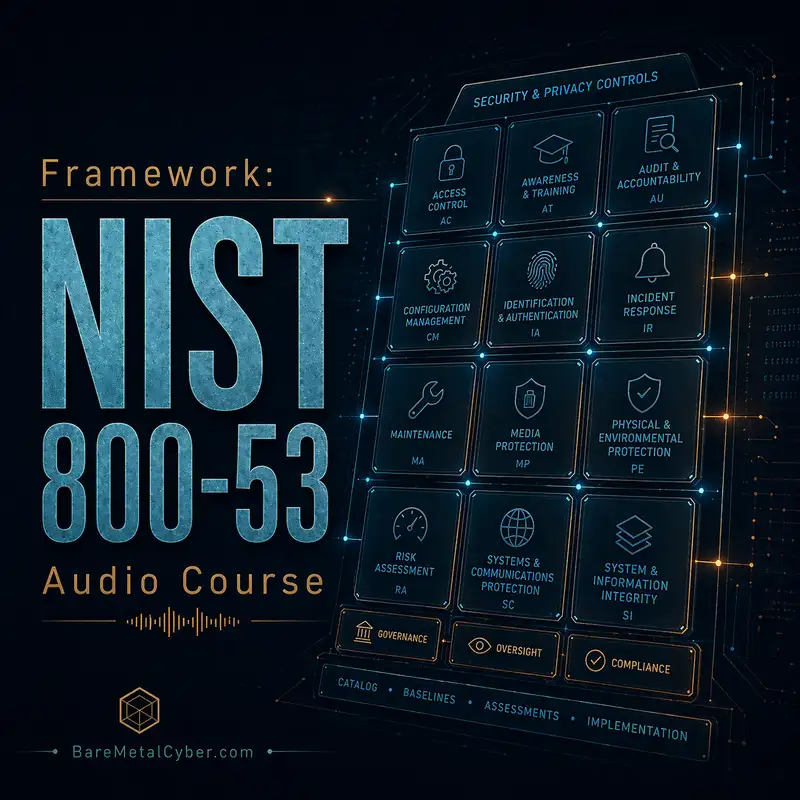
Episode 21 — Audit and Accountability — Part One: Logging purpose, scope, and event taxonomy
Audit and accountability controls within NIST 800-53 ensure that system activities are recorded, traceable, and reviewable to detect misuse or policy violations. For exam purposes, candidates must understand that auditing supports both security and operational assurance by capturing evidence of user actions, system events, and security responses. Logs provide a historical record essential for investigations, performance tuning, and compliance validation. The scope of audit logging should align with system criticality and mission needs, covering authentication, access attempts, configuration changes, and security alerts. A structured event taxonomy—categorizing events by type and significance—ensures consistency in what is logged and how it is interpreted.
Operationally, audit design begins by defining logging requirements based on risk and regulatory drivers. Centralized log management solutions collect, normalize, and store events to prevent tampering and enable correlation across systems. Timestamp synchronization and protected storage maintain data integrity, allowing reliable reconstruction of actions. Establishing clear ownership for log review and retention prevents gaps where threats could hide undetected. Well-designed audit systems not only record events but also enable accountability by linking activities to individual users or processes. Understanding this foundation prepares professionals to analyze audit frameworks confidently and explain how logs underpin both detection and deterrence. Produced by BareMetalCyber.com, where you’ll find more cyber audio courses, books, and information to strengthen your educational path. Also, if you want to stay up to date with the latest news, visit DailyCyber.News for a newsletter you can use, and a daily podcast you can commute with.